So, you’re wondering how consultants actually go about optimizing procurement, aren’t you? It’s not some secret handshake or arcane ritual. At its heart, it’s about taking a structured, analytical approach to how a business buys things, cutting out waste, and getting better value. Think of it like decluttering your house, but for your company’s spending. We look at everything from the big-ticket items to the stationery cupboard and ask: can we do this smarter, cheaper, or better?
Here’s a look at how we tackle it, broken down into practical steps.
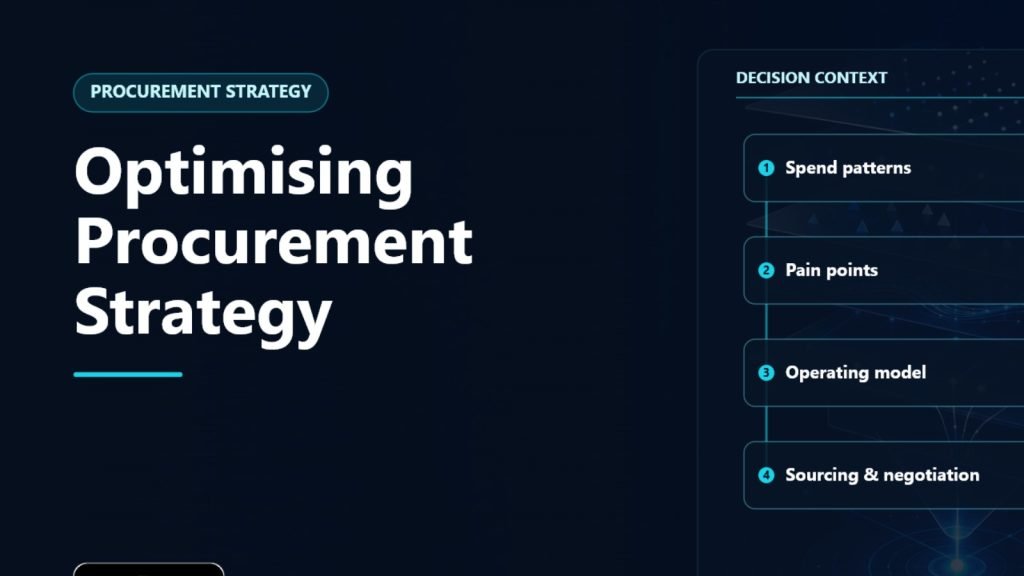
Before you can improve anything, you need to know what you’re working with. It might sound obvious, but many businesses have a vague idea of their spending rather than a precise map. We start by getting our hands dirty with the data.
A Close Look at Spending Patterns
This is where the real detective work begins. We look well beyond total spend and dissect it.
Category Analysis
We group spending into logical categories, IT, marketing, logistics, facilities, raw materials, professional services, and so on. This helps us see where the money is going on a macro level. Are we spending a disproportionate amount on one area? Is a particular category experiencing unchecked growth?
Supplier Base Examination
For each category, we look at the suppliers. How many do we have? Are we consolidating our spend with key partners, or is it fragmented across a multitude of smaller ones? Are there opportunities to use volume for better pricing by reducing the number of suppliers? We also consider supplier performance, are they reliable? Do they meet quality standards?
Contract Review
This is an important, often overlooked, step. What do our existing contracts say? What are the terms, expiry dates, and pricing agreements? Are there clauses that offer flexibility or, conversely, lock us into unfavourable terms? We look for auto-renewal clauses, penalty clauses, and any other contractual details that impact our ability to negotiate or switch.
Identifying Pain Points and Opportunities
With the data in hand, we start to piece together what’s not working and where the potential improvements lie.
Process Mapping
We trace the entire procurement journey, from the initial requisition for a good or service, through to approval, purchase order generation, delivery, and payment. Flowcharts are only the start; the real aim is understanding the human element, the bottlenecks, and the points of friction. Where are approvals getting stuck? Are there too many sign-offs? Is the process too manual and prone to error?
Stakeholder Interviews
Procurement doesn’t happen in a vacuum. We talk to the people who actually buy things, use the goods and services, and manage the budgets. These conversations reveal the practical challenges and informal workarounds that data alone might miss. What are department heads frustrated with? What do end-users find inconvenient? What are finance teams concerned about regarding compliance or payment cycles?
Benchmarking
How do we stack up against our peers? We look at industry averages for procurement maturity, cost savings achieved, efficiency metrics, and supplier relationship management. This helps set realistic targets and identify areas where we are significantly underperforming.
Developing a Strategic Framework: The Blueprint for Change
Once we have a clear picture of the ‘as-is,’ we start to build the ‘to-be.’ This involves creating a strategic roadmap that aligns with the company’s overall business objectives.
Defining Clear Objectives and KPIs
What exactly are we trying to achieve? Simply saying “optimize procurement” isn’t enough. We need specific, measurable, achievable, relevant, and time-bound (SMART) goals.
Cost Reduction Targets
This is often the most immediate concern. We set aggressive but realistic targets for reducing overall spend, perhaps by a percentage or a specific monetary figure. This could be through better pricing, consolidate spend, or finding alternative suppliers.
Efficiency and Cycle Time Improvement
How quickly can we procure items? We aim to reduce the time it takes from requisition to delivery, freeing up internal resources and ensuring business needs are met promptly. This might involve simplifying approval processes or adopting new technologies.
Risk Mitigation and Compliance
Are we protected from supply chain disruptions? Are we adhering to all legal and regulatory requirements? We establish metrics related to supplier risk assessment, contract compliance, and adherence to ethical sourcing policies.
Supplier Performance Enhancement
We don’t just want cheaper goods; we want better quality and reliability. KPIs here might focus on on-time delivery rates, defect rates, and supplier responsiveness.
Designing the Procurement Operating Model
This is about how procurement will function day-to-day, post-optimization. It’s about structure, roles, and responsibilities.
Centralized vs. Decentralized vs. Hybrid Models
Do we need a strong central procurement team, or should individual departments have more autonomy? Or is a blended approach best? The optimal model depends on the company’s size, industry, and culture. A centralized model often offers better leverage and control, while decentralized can be more responsive to specific departmental needs.
Category Management Structures
We often establish dedicated category managers. They become experts in specific spend areas, developing deep knowledge of the market, suppliers, and cost drivers. This fosters strategic relationships and proactive sourcing.
Technology Enablement Strategy
What tools do we need to function effectively? This could range from e-procurement platforms and spend analytics software to contract management systems. The goal is to automate routine tasks, provide better visibility, and enable data-driven decision-making.
Building a Sourcing and Negotiation Strategy
This is where the rubber meets the road in terms of getting better deals.
Spend Consolidation and Leverage
Where possible, we aim to consolidate spend with fewer, high-performing suppliers. This gives us more bargaining power. We identify opportunities to bundle requirements across different departments or business units to achieve economies of scale.
Strategic Sourcing Methodologies
We deploy various sourcing approaches, depending on the category and its strategic importance. This could include competitive tendering, request for proposals (RFPs), tenders, or even single-source negotiations for highly specialized items.
Advanced Negotiation Techniques
This goes beyond simply asking for a discount. We focus on understanding supplier costs, identifying room for manoeuvre, and exploring win-win scenarios through value engineering, extended payment terms, or mutually beneficial partnerships.
Implementing Change: Making It Happen

Strategy is great, but without proper execution, it remains just a document. This phase is about bringing the new procurement model to life.
Change Management and Communication
This is arguably the most critical and often the most challenging aspect. Procurement changes affect many people, and resistance is natural.
Stakeholder Engagement and Buy-in
We need to bring everyone along on the journey. This involves regular communication, addressing concerns, and highlighting the benefits of the changes for different groups. Early and continuous engagement is key to building trust and encouraging adoption.
Training and Skill Development
Our new procurement model might require new skills. We identify training needs for procurement staff, as well as for budget holders and end-users. This could cover anything from using new software to understanding contract terms or negotiation basics.
Reinforcing New Behaviours
It’s not enough to launch a new process; we need to ensure it’s followed. This involves implementing clear policies, providing ongoing support, and celebrating successes to reinforce the desired behaviours.
Technology Implementation and Integration
If new technology is part of the plan, it needs to be rolled out effectively and integrated into existing systems.
Phased Rollout and Testing
We often recommend a phased approach to technology implementation, starting with pilot groups or specific functionalities. This allows for testing, fine-tuning, and troubleshooting before a full-scale deployment.
Data Migration and System Integration
Ensuring that data from legacy systems is accurately migrated and that new systems integrate cleanly with existing IT infrastructure is vital for smooth operation.
User Adoption and Support
Even the best technology is useless if people don’t use it. We focus on comprehensive user training and setting up dependable support so users can find their way around the new systems.
Measuring Success and Continuous Improvement: Keeping the Momentum

Procurement optimization isn’t a one-off project; it’s an ongoing process. We build in mechanisms to ensure sustained improvement.
Tracking Key Performance Indicators (KPIs)
Regularly monitoring the KPIs defined in the strategy phase is essential to gauge progress and identify any deviations from the plan.
Performance Dashboards and Reporting
We create clear, concise dashboards that provide real-time visibility into key procurement metrics. This allows stakeholders to see progress at a glance and for the procurement team to monitor performance proactively.
Cost Savings Realization
We carefully track actual cost savings achieved against targets, ensuring that the financial benefits of the optimization efforts are quantifiable and visible.
Process Efficiency Metrics
We continually monitor metrics like requisition-to-order cycle times, approval turnaround times, and the reduction in manual effort to ensure efficiency gains are being maintained.
Post-Implementation Review and Adjustment
Even with the best planning, things can change, and unforeseen challenges can arise.
Periodic Performance Reviews
We schedule regular reviews to assess the effectiveness of the new procurement model, identify what’s working well and what’s not, and celebrate successes.
Identifying New Opportunities
The market is constantly evolving. We look for new opportunities to further optimize spend, improve supplier relationships, and enhance processes based on evolving business needs and market dynamics.
Embedding a Culture of Continuous Improvement
The ultimate goal is to create a procurement function that is constantly looking for ways to improve. This involves building a mindset of agility, innovation, and data-driven decision-making throughout the team.
Future-Proofing Procurement: Looking Ahead
| Metrics | Data |
|---|---|
| Cost Savings | 10% |
| Supplier Performance | 90% |
| Procurement Cycle Time | 30 days |
| Contract Compliance | 95% |
Beyond the immediate optimization, a forward-thinking consultant will also consider how to build a procurement function that can adapt to future challenges and opportunities.
Embracing Technology and Automation
The role of technology in procurement is only going to increase. We advise on how to use AI, machine learning, and advanced analytics for predictive forecasting, risk assessment, and automated decision-making.
Developing Stronger Supplier Relationships
Moving beyond transactional interactions to building true partnerships can create significant value. This involves regular communication, collaborative problem-solving, and co-innovation with key suppliers.
Navigating Supply Chain Resilience and Sustainability
Geopolitical events, climate change, and other factors are increasingly impacting supply chains. We help businesses build resilience through diversification, risk mapping, and exploring sustainable sourcing options.
Talent Development and Knowledge Management
A skilled and knowledgeable procurement team is essential for long-term success. We focus on creating development pathways, knowledge-sharing platforms, and a culture that attracts and retains top talent.
Ultimately, our aim as consultants is to equip your organization with a procurement function that saves money and improves efficiency today and also provides a strategic advantage for the future. It’s about making procurement a proactive, value-adding part of the business rather than a back-office function.