IT vendor negotiation guide. Last reviewed:
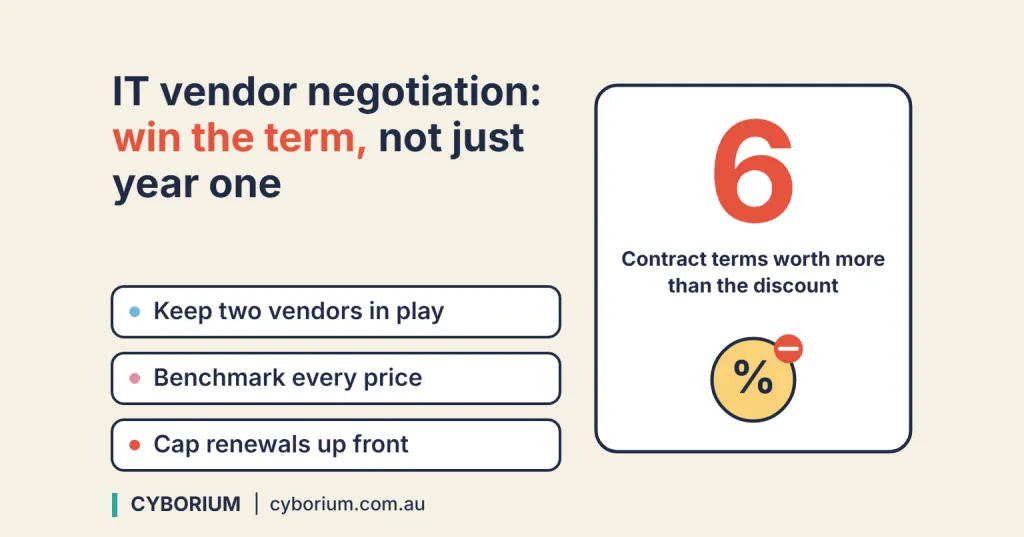
Better pricing in IT procurement comes from competition, evidence and timing rather than hard bargaining. Keep at least two credible vendors in play until terms are agreed, benchmark every price against comparable offers, and negotiate the whole contract, including renewals, exit and service levels, rather than the first-year discount. Most of the value sits in terms that most organisations never raise.
Where organisations lose leverage
- Announcing a preferred vendor too early. Once a vendor knows it has won, the incentive to improve terms disappears.
- Negotiating only the headline price. A large first-year discount can be recovered through renewal uplifts and paid add-ons.
- No price evidence. Without benchmarks, the organisation cannot tell a fair price from a high one.
- Deadlines set by the vendor. End-of-quarter pressure shifts the timeline in the vendor’s favour.
A structured approach to negotiation
- Prepare a negotiation plan. List your objectives, the walk-away position and the concessions you can offer, such as a reference, a case study or a faster signature.
- Benchmark the price. Compare offers on the same scope and term. Normalise for currency, volumes and included services.
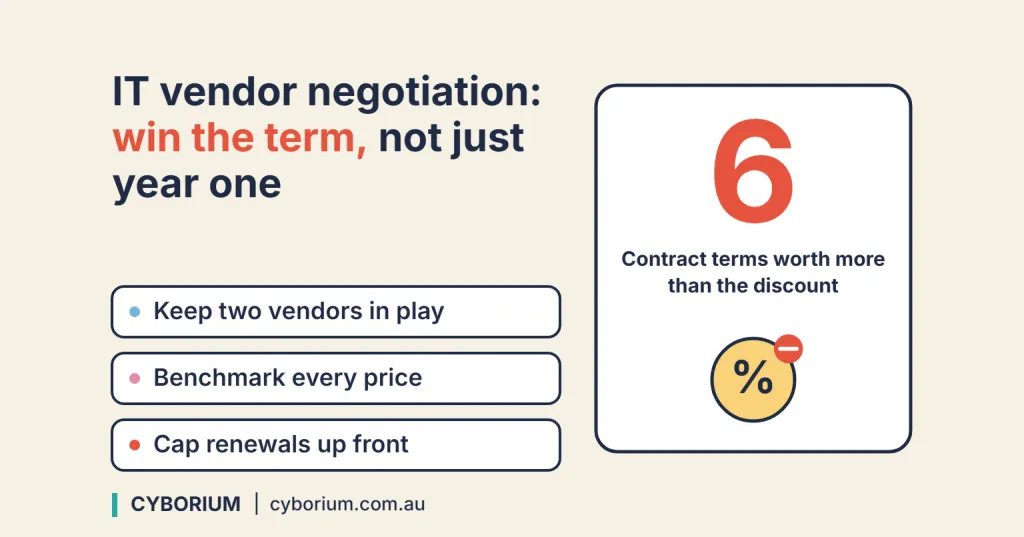
- Keep competitive tension. Run commercial discussions with two or more shortlisted vendors in parallel.
- Negotiate the whole term. Agree renewal caps, price protection for growth and exit assistance at the start.
- Trade, do not concede. Each concession you give should be matched by one you receive.
- Document everything. Make sure every agreed term appears in the contract, not only in emails or proposals.
Terms worth more than the discount
| Term | What to ask for | Why it matters |
|---|---|---|
| Renewal cap | A fixed maximum increase at each renewal | Stops the year-one discount being clawed back |
| Volume flexibility | The right to reduce licences at renewal | Avoids paying for shelfware |
| Price protection | Additional units at the agreed rate | Keeps growth affordable |
| Service credits | Meaningful credits linked to service levels | Gives the service level real weight |
| Exit assistance | Data return and transition support at agreed rates | Reduces lock-in and switching cost |
| Payment terms | Annual in arrears or milestone payments | Protects cash flow and leverage |
For AI and usage-based services, add spend caps and clear unit definitions. The guides to enterprise AI pricing and AI contract clauses cover these in detail. The list of hidden costs in software contracts is a useful checklist before signing.
Renewals are a negotiation too
Renewals are where many organisations overpay, because the incumbent knows switching is hard. Start renewal planning six to nine months before the end date, review actual usage, and test the market even if you expect to stay. A credible alternative is the strongest position at renewal. See the guide to software licence renewals.
How CYBORIUM supports negotiation
CYBORIUM provides technology contract negotiation support as part of a structured procurement: commercial benchmarking, a negotiation plan and a review of terms before signature. CYBORIUM is independent and carries no fee to your organisation. You contract directly with the provider you select.
Frequently asked questions
When should negotiation start in an IT procurement?
Before the vendor knows it has won. Your leverage is highest while two or more credible options remain, so commercial terms should be tested during the evaluation, not after a preferred vendor is announced.
What can be negotiated besides price?
Renewal caps, payment terms, contract length, termination rights, service levels and credits, implementation scope, training, data exit assistance, price protection for additional licences and the timing of commitments.
Is the end of a vendor’s financial quarter a good time to buy?
It can help, because sales teams have targets to meet. It should not drive the timeline, however. A rushed decision to capture a discount can cost more than the discount over the term.
How do you benchmark IT pricing?
Compare like-for-like offers from competing vendors, use published price lists where available, and draw on recent pricing for comparable organisations. An independent adviser with current market data can shorten this work.
Should we negotiate multi-year discounts?
Only with protections. A longer term can reduce the annual price, but it should include a cap on increases, the right to reduce volumes and clear exit terms if the service fails.
Related guidance: total cost of ownership, exit and transition-out terms, procurement email templates.