What is procurement for enterprise?
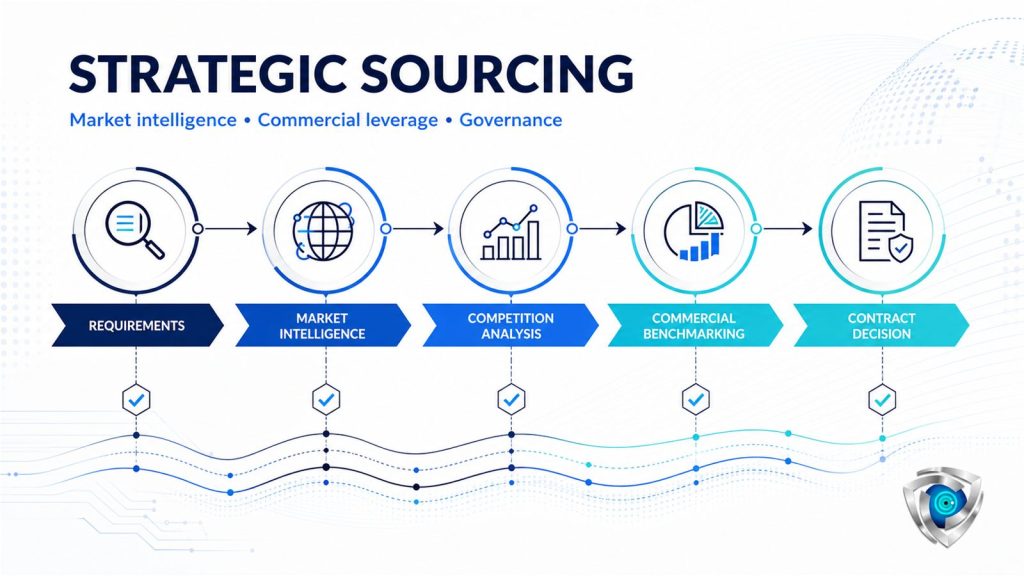
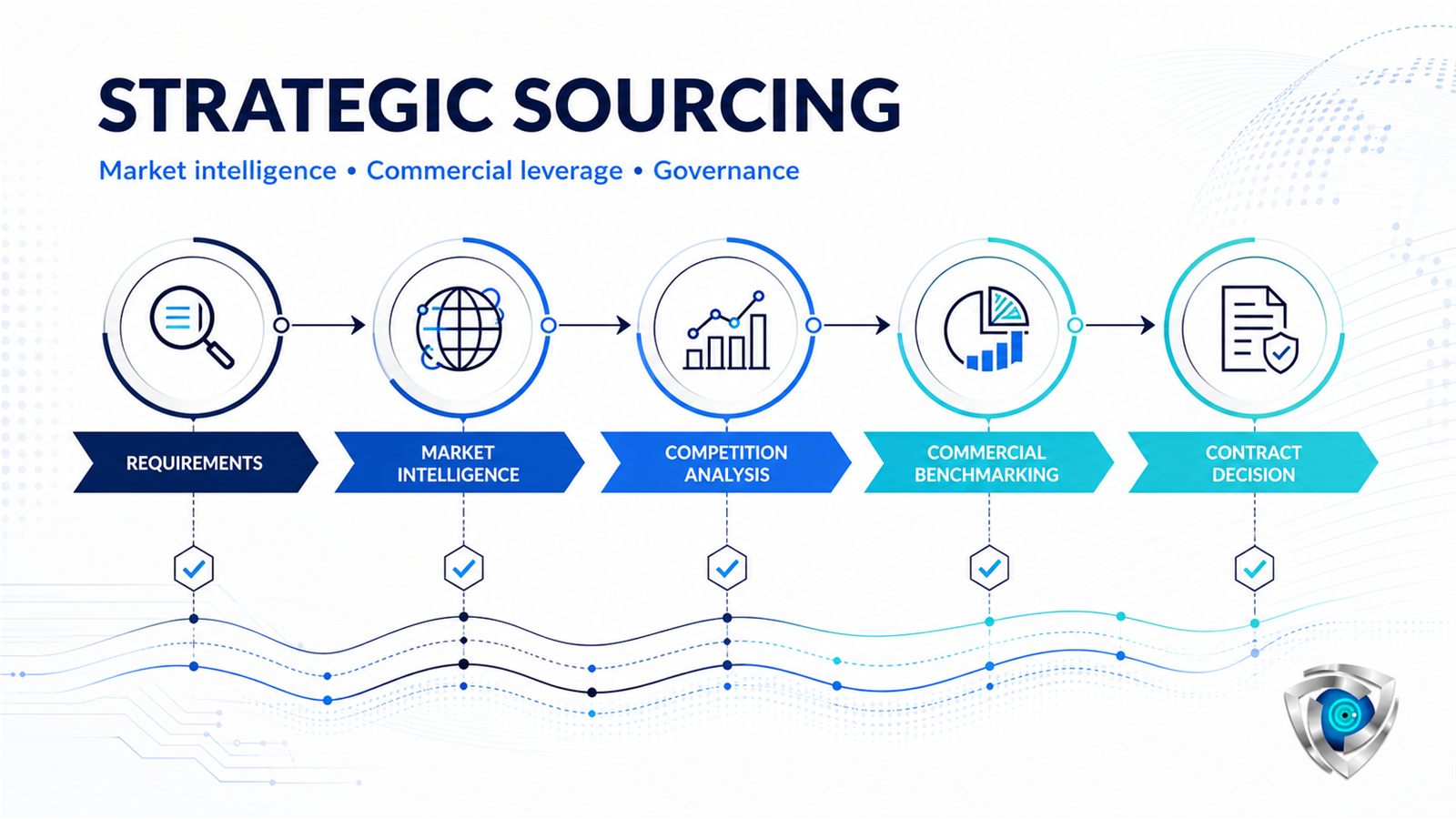
Procurement for enterprise is the structured process large organisations use to define requirements, evaluate the supplier market and agree commercial terms. It differs from transactional buying by adding governance, evidence-based evaluation and a documented decision record that stands up to board and audit scrutiny.
Where Sourcing Intelligence Fits In
Sourcing intelligence is the market data behind a sourcing decision: what comparable organisations are paying, which vendors are gaining or losing market share, and what commercial terms are actually achievable rather than aspirational. Without it, negotiation happens blind. Most enterprise decision owners underinvest here because it’s harder to gather than it looks; vendors have no incentive to share pricing benchmarks, and public data is thin for enterprise technology and cybersecurity categories specifically.
Negotiation Tactics That Hold Up in Enterprise Deals
Effective enterprise negotiation depends less on tactics in the room and more on preparation before it. Genuine competitive tension, created by having real alternative vendors in play rather than a single incumbent, is the single biggest lever. Beyond that: know your walk-away position before you start, negotiate the full contract (exit terms, price escalation clauses, service credits) rather than headline price alone, and time negotiations to the vendor’s sales cycle rather than your renewal deadline where possible.
How CYBORIUM Applies These Fundamentals
CYBORIUM runs sourcing engagements against this exact framework: requirements are prioritised first using a method such as MoSCoW, genuine market competition is built in rather than assumed, and commercial terms are benchmarked before negotiation begins. Because CYBORIUM is compensated by the selected provider through a capped, success-based model rather than by the client, the sourcing intelligence behind each recommendation isn’t shaped by which vendor pays the advisory fee. For cybersecurity and AI vendor decisions specifically, see the dedicated evaluation frameworks linked below.
Frequently Asked Questions
What is the difference between strategic sourcing and procurement?
Procurement is the operational process of buying goods and services. Strategic sourcing is the upstream discipline of deciding which vendors to buy from, based on total value and market analysis rather than convenience or an existing relationship.
How do you reduce procurement costs without cutting quality?
Focus on structural levers rather than line-item cuts: consolidate spend with fewer, better-fit vendors, standardise contract terms, and introduce a formal review before every renewal rather than defaulting to auto-renewal at existing pricing.
Why does sourcing intelligence matter in vendor negotiations?
Without market data on what comparable organisations pay and what terms are actually achievable, a decision owner has no way to tell a genuinely competitive offer from a vendor’s standard opening position.
Strategic sourcing only works when it’s genuinely independent of the vendors being evaluated. CYBORIUM runs guided sourcing engagements at no cost to the client, with the selected provider funding a capped fee once the engagement is confirmed. Get in touch to discuss your requirements.
Standards and further reading
Strategic sourcing fundamentals are better learned from the rules decision owners are held to than from a methodology diagram.
- Commonwealth Procurement Rules. The clearest published statement of what value for money requires and how it must be evidenced.
- ISO 31000:2018. Risk management guidelines, so a sourcing decision can be expressed as a risk position rather than a price.
- ANAO procurement and contract management insights. What auditors find when they examine sourcing decisions after the fact.