What is enterprise vendor risk management?
Enterprise vendor risk management is the process of assessing and monitoring the risk a third-party supplier introduces to an organisation. It covers security posture, delivery capability, financial stability and exit terms, applied before contract is signed and repeated throughout the relationship rather than once at onboarding.
Supply Chain Risk in an Enterprise Technology Context
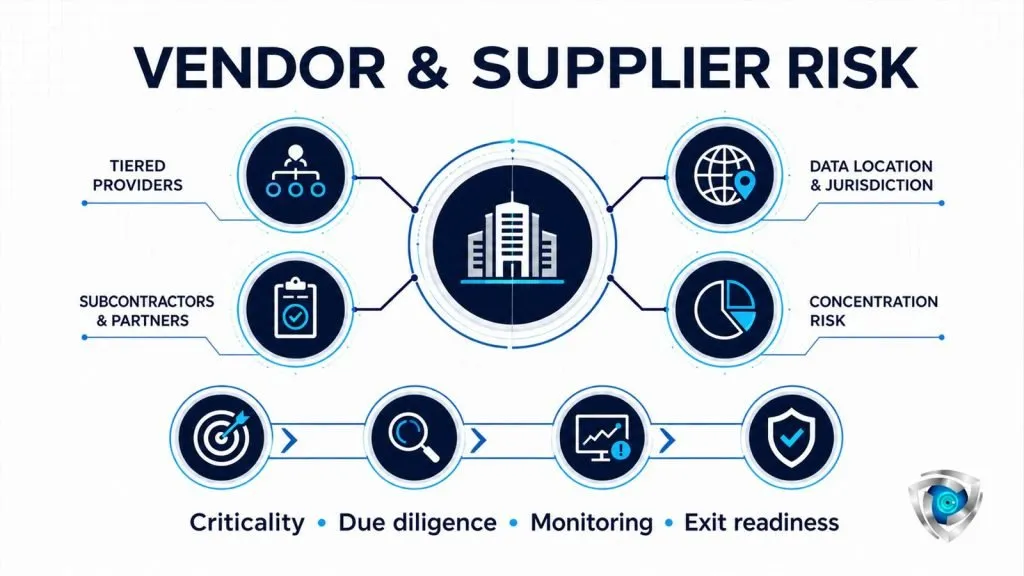
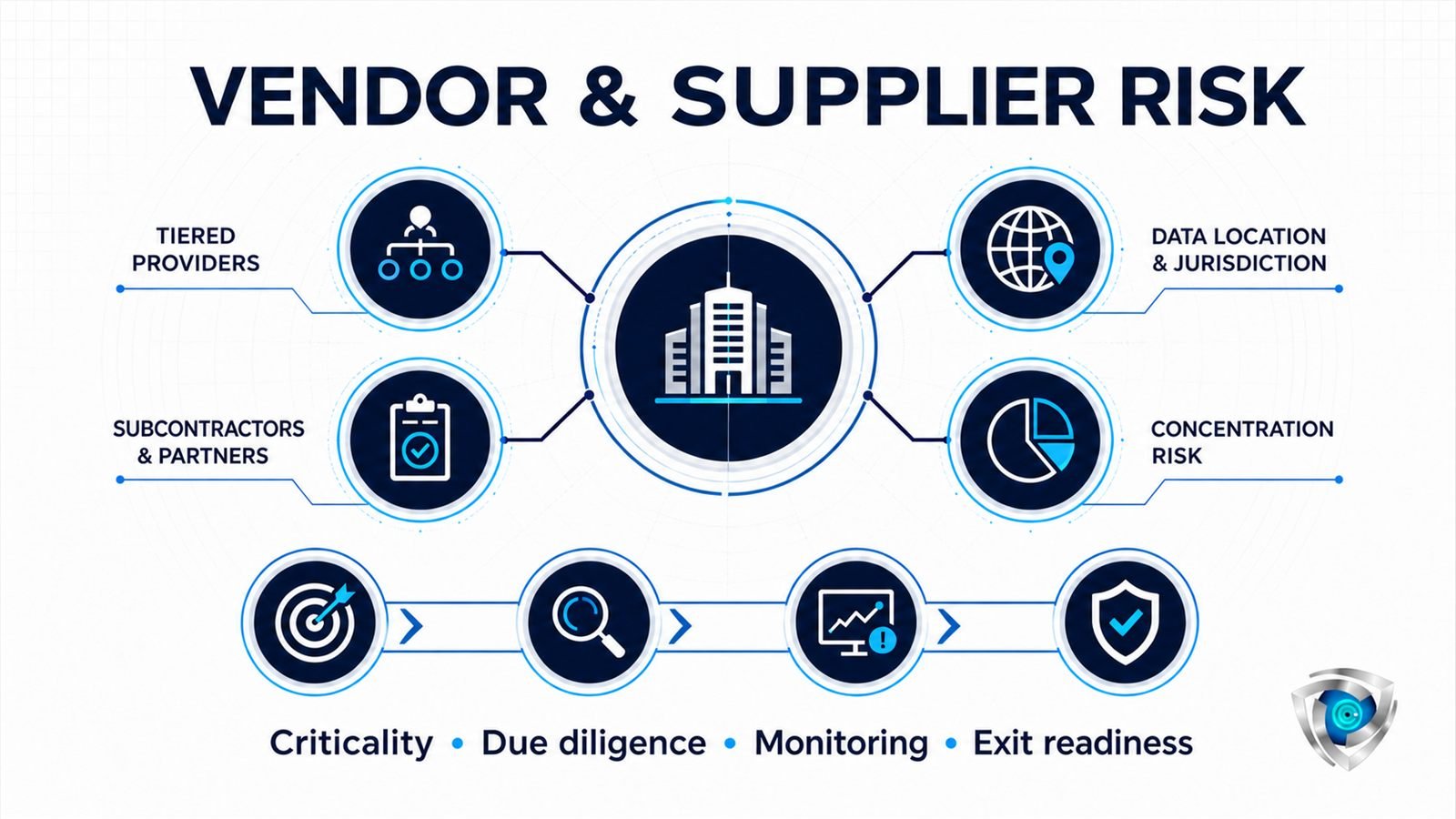
For technology and cybersecurity vendors specifically, supply chain risk extends past the direct contract: it includes the vendor’s own sub-processors, the jurisdictions your data moves through, and concentration risk if too many critical systems depend on a single provider. Mapping this properly means asking vendors what sits behind them as well as evaluating what they present directly.
A Practical Risk Management Framework for Procurement
Effective procurement risk management rests on four habits: classify vendors by criticality rather than treating all suppliers the same, set a review cadence matched to that criticality (critical vendors reviewed far more often than low-risk ones), document risk findings so they carry forward past individual staff changes, and build an exit plan for every critical vendor before you need one, not after a problem forces the question.
How CYBORIUM Supports Vendor and Risk Oversight
CYBORIUM builds vendor criticality and risk review into the initial evaluation, using a MoSCoW-prioritised requirements set so critical dependencies are flagged from the outset rather than discovered later. Because CYBORIUM is compensated by the selected provider through a capped, success-based model rather than by the client, the risk assessment behind each recommendation isn’t softened to protect an existing relationship. For cybersecurity vendor decisions specifically, see the dedicated evaluation framework linked below.
Frequently Asked Questions
What is vendor risk management in procurement?
The ongoing process of monitoring whether a contracted vendor’s financial position, security posture, service performance and compliance status still meet the standard required, rather than assuming the vendor evaluated at signature remains unchanged for the life of the contract.
How often should critical vendors be reviewed?
Review cadence should match criticality rather than follow a single organisation-wide schedule. Vendors supporting critical systems or holding sensitive data typically warrant an annual or more frequent review; low-risk suppliers can be reviewed on a longer cycle.
What is supply chain risk in technology procurement?
Risk that extends beyond the direct vendor contract to their sub-processors, the jurisdictions data passes through, and concentration risk from depending too heavily on a single provider for critical systems.
Vendor and supplier risk oversight only holds up if it is genuinely independent of the vendors being reviewed. CYBORIUM runs guided vendor evaluations and risk reviews at no cost to the client, with the selected provider funding a capped fee once the engagement is confirmed. Get in touch to discuss your requirements.
Standards and further reading
Supplier risk is assessed before contract and managed after it. These three cover both halves.
- APRA CPS 230. Material service provider obligations, including what must be in place before reliance begins.
- ISO 31000:2018. A consistent way to rate and re-rate supplier risk so that ratings mean the same thing across a portfolio.
- ASD Annual Cyber Threat Report. The Australian incident data that makes a supplier risk rating something other than an opinion.
Related from CYBORIUM
- Guided Vendor Evaluations
- Our Procurement Methodology
- Supply Chain and Third-Party Risk Management: Protecting Australian Enterprises from Indirect Cyber Threats in 2026
- Cyber Risk Quantification: Evaluating Providers and Using Results in Insurance Decisions
- Top 5 Vendor Management Challenges Facing Sydney Enterprises, And How to Solve Them in 2026
Also relevant: privileged access held by third parties.